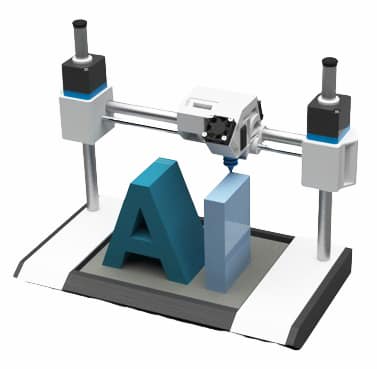
Learn what affects 3D printing costs in India, compare FDM, SLA, and SLS pricing, and discover ways to reduce your manufacturing expenses.
Introduction
One of the most common questions engineers, startups, students, and manufacturers ask is:
“How much does 3D printing cost in India?”
The answer depends on several factors, including:
- Printing technology
- Material selection
- Part size
- Design complexity
- Surface finish
- Production quantity
In India, a simple FDM prototype may cost only a few hundred rupees, while advanced metal-printed components can cost thousands or even tens of thousands of rupees. Recent industry pricing guides show that FDM is generally the most affordable option, while SLA, SLS, and metal printing command higher prices due to materials and equipment costs. Layer X
This guide explains the major cost drivers and helps you estimate what your next project might cost.
What Determines the Cost of a 3D Printed Part?
1. Material Usage
Material consumption is often the largest factor in pricing.
A lightweight part with low infill uses significantly less material than a solid component.
Common materials include:
| Material | Typical Use |
|---|---|
| PLA | Prototypes, educational projects |
| PETG | Functional parts |
| ABS | Engineering applications |
| TPU | Flexible components |
| Nylon | Industrial parts |
Material choice can substantially affect the final quote because engineering-grade materials are more expensive than standard PLA. iamRapid
2. Print Time
A printer running for 20 hours costs more than one running for 2 hours.
Print time depends on:
- Layer height
- Part orientation
- Support structures
- Model complexity
Large or highly detailed models require longer machine operation and therefore higher costs. FDM Tech Lab
3. Printing Technology
Different technologies have very different operating costs.
| Technology | Best For |
|---|---|
| FDM | Cost-effective prototypes |
| SLA | High-detail parts |
| SLS | Functional production parts |
| DMLS | Metal components |
FDM remains the most affordable option for most prototypes, while SLA and SLS provide higher precision and better mechanical properties at higher cost. Partwork
Typical 3D Printing Costs in India
FDM Printing
FDM is the most popular technology because of its affordability.
Typical applications:
- Product prototypes
- Enclosures
- Fixtures
- Educational projects
Typical pricing ranges from a few hundred rupees for small parts to several thousand rupees for larger engineering components. Layer X
SLA Printing
SLA uses liquid resin and delivers:
- Smooth surfaces
- Fine details
- High dimensional accuracy
This makes it ideal for:
- Product visualization
- Medical models
- Jewelry patterns
SLA generally costs more than FDM because resin materials and post-processing requirements are more expensive. YantriX Technologies
SLS Printing
SLS prints nylon parts using laser-sintered powder.
Benefits include:
- Strong functional parts
- Complex geometries
- No support structures
SLS is commonly used for:
- Production components
- Functional prototypes
- End-use parts
Costs are typically higher than FDM and SLA but often become economical for low-volume production. YantriX Technologies
Additional Costs You Should Consider
Post-Processing
Many parts require additional finishing such as:
- Sanding
- Painting
- Vapor smoothing
- Dyeing
- Threaded inserts
Post-processing can significantly increase the total project cost. YantriX Technologies
Design and CAD Work
If you do not already have a CAD model, design services may be required.
Professional CAD services are often charged separately and depend on:
- Complexity
- Number of components
- Engineering requirements
Quantity
Quantity has a major effect on pricing.
Producing 50 identical parts is often much cheaper per unit than producing a single part because setup and machine preparation costs are distributed across the entire batch. Layer X
How to Reduce Your 3D Printing Cost
Optimize Part Design
Reduce unnecessary material volume by:
- Hollowing large sections
- Using optimized infill
- Minimizing support structures
Choose the Right Material
Not every project requires engineering-grade nylon or carbon-fiber materials.
For many prototypes, PLA or PETG may be sufficient.
Order in Batches
Combining multiple parts into a single order can significantly reduce per-part costs. Layer X
When Is 3D Printing More Cost-Effective Than Traditional Manufacturing?
3D printing is usually the better option when:
- You need prototypes quickly
- Production volume is low
- Tooling costs must be avoided
- Frequent design changes are expected
Traditional methods such as injection molding become more economical when manufacturing thousands of identical parts. kad3dstudio
Conclusion
3D printing costs in India vary depending on technology, material, complexity, and quantity.
For most prototype projects:
- FDM offers the lowest cost
- SLA provides higher detail
- SLS delivers industrial-grade functionality
Understanding these factors helps you make better design decisions and avoid unexpected expenses.
If you’re looking for an accurate quotation, upload your CAD file and evaluate different materials and manufacturing options before production begins.


